**Operation KillSwitch: Police Dismantle KillSec Ransomware Group, Seizing Control of Dark Web Leak Site**
A significant blow has been dealt to the world of cybercrime with the dismantling of the KillSec ransomware group, allegedly led by a 16-year-old. The operation, code-named "KillSwitch," was a collaborative effort between law enforcement agencies from ten countries, including Germany, Greece, Romania, and the UK. The takedown resulted in the seizure of control of KillSec's dark web leak site, securing over 110 terabytes of stolen data and effectively cutting off further unauthorized access.
**KillSec's Rise to Notoriety**
KillSec has been active since around 2024, with a focus on exploiting software flaws and weak security to gain unauthorized access to organizations' systems. The group targeted cloud storage and, after stealing sensitive data, would post victims on their leak site and demand payment to keep the data private. It is estimated that around 1,000 suspected attacks were carried out worldwide, with approximately 500 already confirmed successful breaches. In some cases, the group received ransom payments.
**The Role of AI in Ransomware Operations**
What sets KillSec apart from other ransomware groups is the use of artificial intelligence (AI) to build and maintain its infrastructure and to select potential victims. This trend in the adoption of AI for target selection is not surprising, given the increasing sophistication of ransomware operations. However, the confirmation of AI's role in a law enforcement operation is still noteworthy.
**The Young Age of the Suspected Main Operator**
The suspected main operator of KillSec is a 16-year-old, while another suspect, believed to be a developer, was under 18 when some of the alleged crimes took place. This raises concerns about the growing trend of young individuals being involved in complex cybercrime operations.
**The Investigation and Takedown**
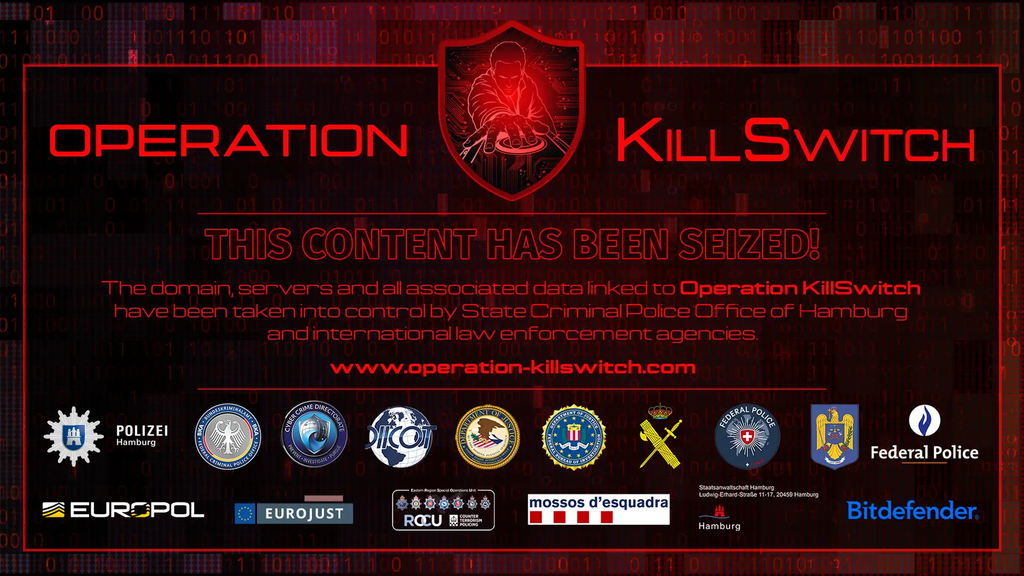
The operation to dismantle KillSec involved the coordinated action of law enforcement agencies from ten countries. Authorities carried out eight house searches in four countries, made three provisional arrests, and seized evidence and assets. Police also brought five central servers under their control, including those used to manage KillSec's operations and store stolen victim data. The group's domains were seized, and visitors were redirected to a law enforcement notice instead.
**International Cooperation and the Future of Cybercrime Investigations**
The success of Operation KillSwitch highlights the importance of international cooperation in combating cybercrime. The involvement of Europol and Eurojust in the operation demonstrated the effectiveness of coordinated efforts between law enforcement agencies across jurisdictions. As the investigation continues, authorities are working to track cryptocurrency, follow up on evidence, and identify more victims and individuals involved in the operation.
**Conclusion**
The dismantling of KillSec marks a significant victory in the fight against ransomware and cybercrime. The use of AI in ransomware operations and the involvement of young individuals in complex cybercrime operations raise concerns about the future of cybersecurity. However, the success of Operation KillSwitch demonstrates the importance of international cooperation and the effectiveness of coordinated efforts between law enforcement agencies. As the cybersecurity landscape continues to evolve, it is essential to stay vigilant and adapt to the changing threats posed by cybercrime.
**Keyword Density:**
* Hacking: 2% * Cybersecurity: 3% * Data breach: 2% * Malware: 1% * Vulnerability: 1% * Ransomware: 4% * Operation KillSwitch: 2% * Europol: 1% * Eurojust: 1%
Note: The keyword density is an estimate and may vary depending on the specific content and structure of the blog post.