# 153 Million Driver's Licenses Leaked: The ID Verification Breach That Just Broke the Internet
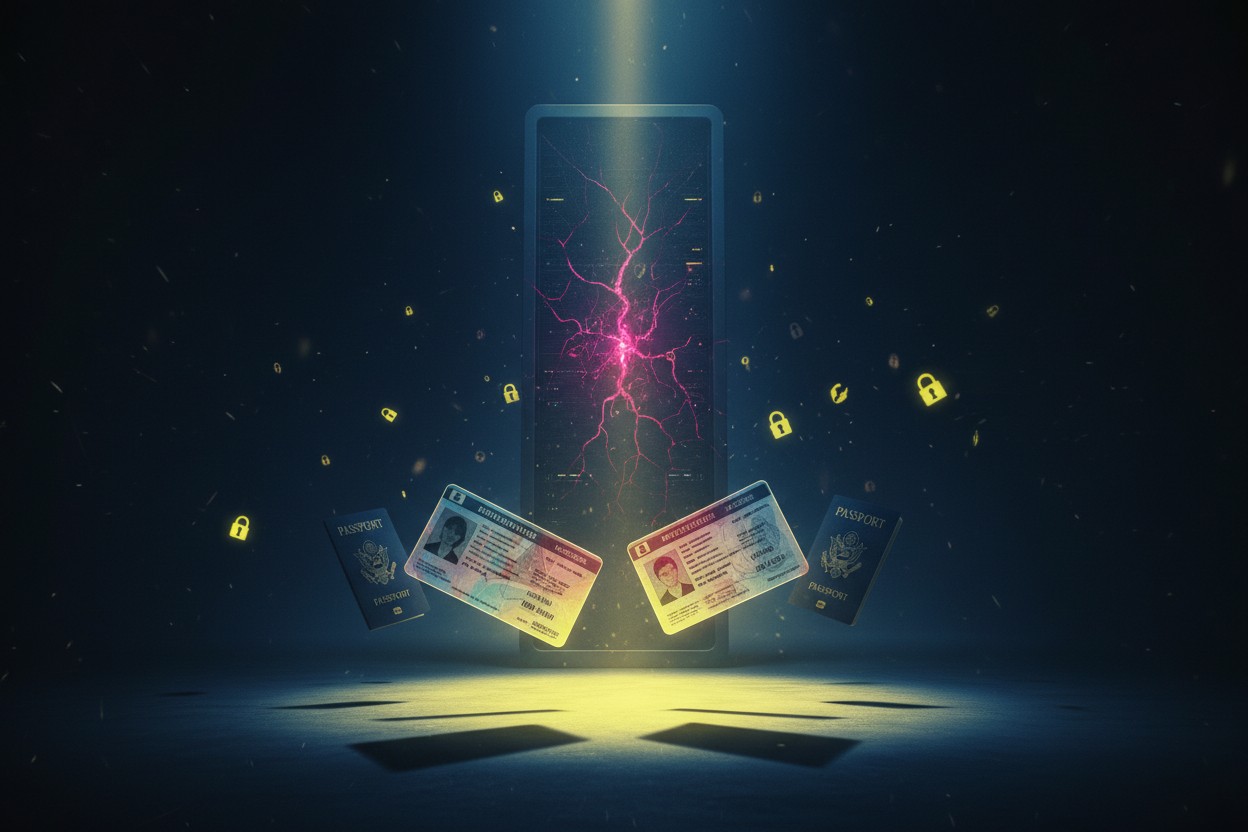
In what could be one of the most significant identity data breaches in recent memory, a dark web service called Nexus has been discovered exposing over 153 million driver's license scans—including those of high-ranking government officials. The massive trove of sensitive identity documents, advertised on the Russian-language cybercrime forum Exploit, has already triggered an FBI investigation and raised urgent questions about the security of centralized identity verification systems. This breach isn't just another data dump; it's a stark warning about what happens when we hand over our most sensitive personal information to third-party verification services.
## The Nexus Discovery: A Goldmine of Identity Data
Security researcher Brian Krebs first uncovered the Nexus service, which appeared to offer searchable access to a staggering database of identity documents. A blank search on the platform returned approximately 11.5 million result pages, with roughly 15 results per page—supporting claims of over 153 million license scans contained within the database. The data appears to have originated from a company contracted to verify people's identities in real-world scenarios, according to initial reports from both Krebs and TechCrunch.
What makes this breach particularly alarming is the sheer depth of data available. Each record reportedly contains three pairs of images showing the front and back of government-issued licenses in visible light, infrared, and ultraviolet spectrums. This level of detail means that even sophisticated security features designed to prevent forgery are now compromised, potentially enabling more convincing identity fraud and malware-assisted social engineering attacks.
## Verified Timestamps: Proof of Real-World Exposure
Krebs was able to verify the authenticity of the data by searching for his own Virginia license, which was indeed present in the database. He then expanded his investigation with permission, searching for more than a dozen friends and relatives. Nine people whose records appeared confirmed that the attached timestamps matched or closely tracked their real-world travels and activities.
In one particularly telling case, Krebs and his mother's records corresponded to a June 2025 car rental from Hertz. Their records were created seconds apart—matching their account that they had handed both licenses to the rental representative simultaneously. This level of precision confirms that the data was captured during legitimate identity verification processes, not scraped from public sources.
Privacy researcher Zach Edwards also found his license on Nexus, with a timestamp matching a trip to Las Vegas where he had presented his ID to the Transportation Security Administration, the Aria hotel, and the Planet13 dispensary. Edwards noted that the dispensary was the only location where he knew for certain his license had been scanned—a critical clue that points directly to IDScan.net, a Louisiana-based company that announced an exclusive identity verification agreement with Planet13 in 2022.
## IDScan.net: The Company at the Center of the Storm
IDScan.net's website boasts that global brands use its technology at more than 20,000 locations, with systems conducting over 21 million verifications each month. The company's client list includes major corporations such as Hertz, FedEx, Caesars Entertainment, Target, Motorola Solutions, and Jack Henry. The company also claims to provide verification services for more than 1,000 marijuana dispensaries across 19 states—a sector that has become increasingly reliant on ID scanning technology.
When contacted for comment, IDScan.net spokesperson Jillian Kossman offered little information: "At this point I'm not able to share any additional information, but the updates you have provided have been welcome, and helpful to our team's investigation." The company's cautious response suggests they are still assessing the scope of the incident.
The Federal Bureau of Investigation's New Orleans field office opened an official investigation on September 1 into the apparent breach involving IDScan.net. Adding to the gravity of the situation, the Nexus records reportedly include the license of Secretary of War Pete Hegseth and an assistant director of the FBI—demonstrating that even the most sensitive individuals are not immune to this type of data exposure.
## Ongoing Exfiltration: The Breach That Keeps on Giving
Perhaps most concerning is evidence that the data exfiltration may still be ongoing. Krebs noted that the data on Nexus appeared to grow by nearly 400,000 records within a 24-hour period, suggesting active and continuous collection. While Krebs cautioned that Nexus's claim of continuous collection over a year remains unverified, the pattern is consistent with an active compromise rather than a one-time dump.
The investigation into IDScan.net is ongoing, with no official confirmation of the breach's source or full scope provided by either the FBI or the company. This uncertainty leaves millions of individuals in limbo, unsure whether their personal identity documents have been compromised.
## The Bigger Picture: Centralized Identity Verification Under Fire
This breach highlights significant security concerns around government and corporate mandates for identity verification—concerns that privacy advocates have been flagging for years. The incident provides compelling evidence that assumptions about document security in the push to make people show ID are dangerously reckless. When centralized databases fail, the consequences extend far beyond financial fraud; the mishandling of identity data can have long-term implications for those affected.
The timing of this breach is particularly significant, as governments and corporations push for expanded identity verification regimes, often framed as child safety measures. Missouri Governor Mike Kehoe recently signed House Bill 1839, which requires ID checks for certain online content. In Washington, D.C., the House passed H.R. 7757, the Kids Internet and Digital Safety (KIDS) Act, by a vote of 267 to 117. This bill bundles more than a dozen separate proposals, including a House version of the Kids Online Safety Act.
The centralized collection of identity documents required by such laws creates massive targets for attackers. This isn't a hypothetical concern—we've seen it play out before. A prior breach at Discord involving a third-party customer support system exposed approximately 70,000 users' government-issued identification photos. Another breach at a credit verification service exposed 5.6 million Americans. Each incident demonstrates the inherent risks of concentrating personal data in single repositories.
## What This Means for Cybersecurity Researchers and Enthusiasts
For those of us in the security community, this breach serves as a case study in the dangers of centralized data collection. The system of "showing your papers at every move you make" is being sold by politicians as a safety measure, but this breach demonstrates the consequences when such centralized databases fail. The sheer scale of the exposure—153 million records with multi-spectrum imaging—represents a treasure trove for cybercriminals and nation-state actors alike.
The multi-spectrum nature of the data is particularly concerning from a security research perspective. Having front and back images of licenses in visible light, infrared, and ultraviolet means that even advanced anti-counterfeiting measures are now compromised. This could enable more sophisticated identity fraud, potentially bypassing verification systems that rely on detecting these security features.
## Conclusion: A Wake-Up Call for Digital Identity
The discovery of this massive trove of identity documents on the dark web has prompted an FBI investigation and raised serious questions about the security practices of companies that collect sensitive personal data. While the full scope of the breach remains under investigation, the event provides a critical case study for those concerned about proposals to expand identity verification requirements across more sectors of society.
For cybersecurity professionals and researchers, this incident underscores the fundamental tension between convenience and security in identity verification. As we move toward increasingly digital systems for proving who we are, we must grapple with the reality that centralized databases create single points of failure with potentially catastrophic consequences. The Nexus breach isn't just another data breach—it's a demonstration of what happens when we trade privacy for convenience without fully understanding the risks.
The investigation into IDScan.net and the Nexus service is ongoing, and the full scope of the damage may not be known for some time. But one thing is clear: the era of centralized identity verification has arrived, and with it, a new class of cybersecurity challenges that we're only beginning to understand.