Wazuh 5.0.0-beta5: The Open-Source XDR Powerhouse Gets a Major Upgrade
The cybersecurity landscape is evolving at a breakneck pace, and the release of Wazuh v5.0.0-beta5 marks a significant milestone for security teams seeking a unified, open-source defense. This latest iteration of the Wazuh platform reinforces its position as a premier XDR and SIEM solution, offering enhanced capabilities for threat detection, log analysis, and compliance management. For security researchers and system administrators alike, this beta release promises a more robust toolkit for safeguarding complex, multi-cloud environments against the ever-growing threat of data breaches and malware infections.
Wazuh has long been recognized as a free and open-source platform designed for threat prevention, detection, and response. What sets this platform apart is its versatility; it is engineered to protect workloads across on-premises, virtualized, containerized, and cloud-based environments. The architecture is elegantly simple yet powerful, consisting of a lightweight endpoint security agent deployed on monitored systems, and a centralized management server that collects and analyzes the data gathered by these agents. Furthermore, Wazuh maintains deep integration with the Elastic Stack, providing users with a robust search engine and data visualization tools that make navigating through security alerts intuitive and efficient.
Deep Dive into Threat Detection and Malware Hunting
At the core of the Wazuh solution is its relentless pursuit of malicious activity. The endpoint agents are designed to scan monitored systems for malware, rootkits, and suspicious anomalies that often evade traditional defenses. These agents are capable of detecting hidden files, cloaked processes, and unregistered network listeners, as well as identifying inconsistencies in system call responses that often indicate a compromise. This host-level visibility is crucial for identifying advanced persistent threats that may have slipped past perimeter defenses.
Complementing the agent’s capabilities, the server component employs a signature-based approach to intrusion detection. By utilizing a powerful regular expression engine, the server analyzes collected log data to look for indicators of compromise (IOCs). This dual-layered approach—combining behavioral analysis on the endpoint with signature-based detection at the server—ensures a comprehensive defense-in-depth strategy. Whether the threat is a known malware strain or a novel zero-day exploit, the platform is designed to flag suspicious behavior and alert security teams before a minor incident escalates into a full-blown data breach.
Mastering Log Analysis and File Integrity Monitoring
Effective cybersecurity relies on visibility, and Wazuh provides this through its sophisticated log analysis capabilities. Wazuh agents read operating system and application logs, securely forwarding them to a central manager for rule-based analysis and storage. In scenarios where deploying an agent is not feasible, the server can also receive data via syslog from network devices and applications, ensuring no blind spots remain. The Wazuh rules engine is particularly adept at making you aware of application or system errors, misconfigurations, and attempted or successful malicious activities, effectively turning raw data into actionable security intelligence.
File Integrity Monitoring (FIM) is another cornerstone of the platform, offering granular oversight of your file system. Wazuh monitors changes in content, permissions, ownership, and attributes of critical files, natively identifying the users and applications responsible for these modifications. This capability is not just a best practice; it is a mandatory requirement for many regulatory compliance standards, such as PCI DSS. When combined with threat intelligence, FIM becomes a powerful tool for identifying compromised hosts, as sudden changes to system binaries or configuration files are often the first sign of an attacker establishing persistence.
Proactive Vulnerability Assessment and Configuration Auditing
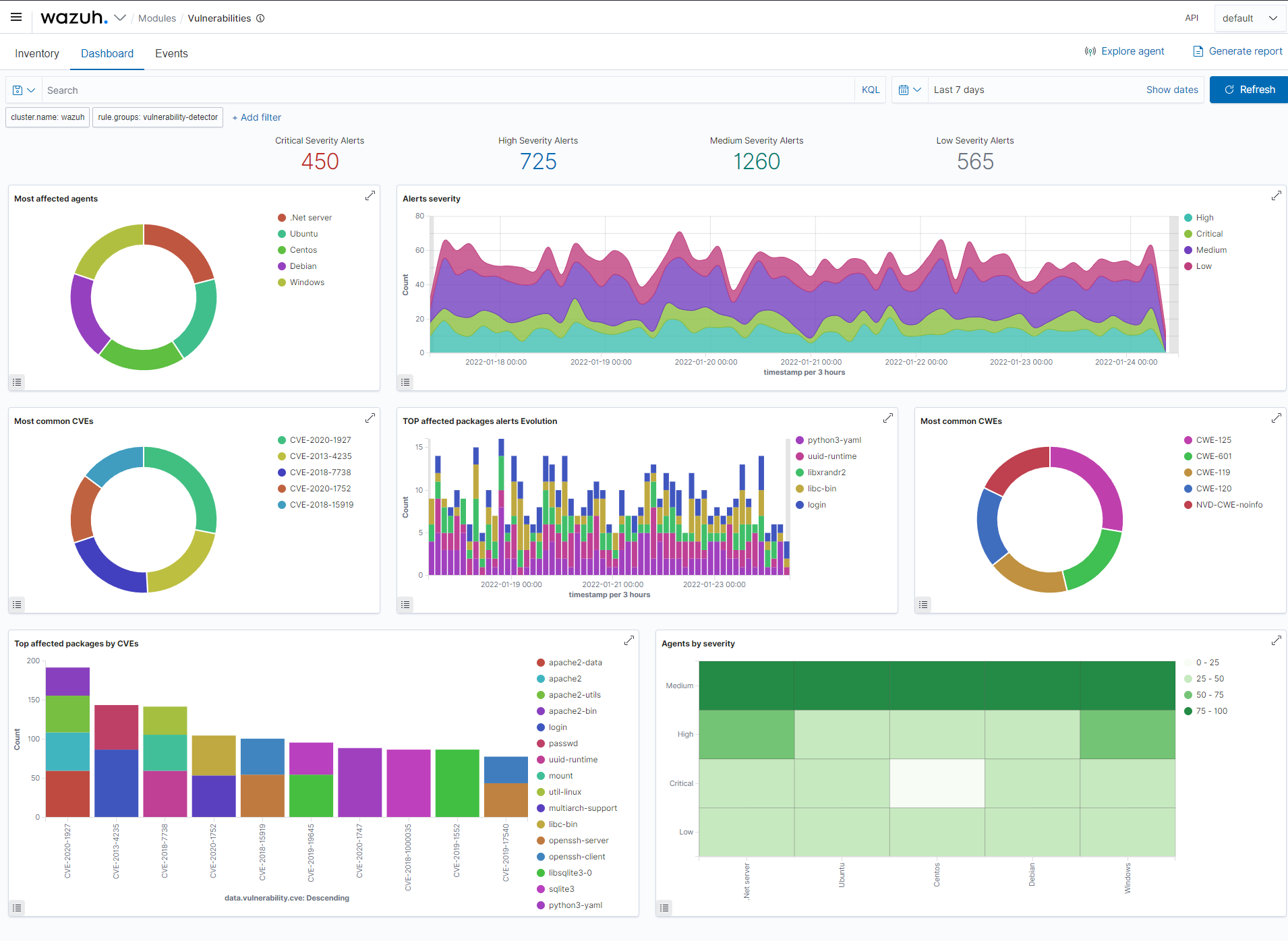
In the fight against cyber threats, knowing your weaknesses is half the battle. Wazuh agents pull software inventory data and send this information to the server, where it is correlated with continuously updated CVE (Common Vulnerabilities and Exposures) databases. This automated vulnerability assessment helps security teams identify well-known vulnerable software before attackers can exploit them. By pinpointing weak spots in critical assets, organizations can take corrective action proactively, thwarting attempts to sabotage business operations or steal confidential data.
Beyond software vulnerabilities, Wazuh monitors system and application configuration settings to ensure they align with your security policies and hardening guides. Agents perform periodic scans to detect applications that are known to be vulnerable, unpatched, or insecurely configured. The configuration checks are highly customizable, allowing organizations to tailor them to their specific needs. When a misconfiguration is detected, the alerts generated include recommendations for better configuration, references, and mapping with regulatory compliance frameworks, effectively guiding administrators toward a more secure posture.
Automated Response and Cloud-Native Security
Detection is only half the equation; response is where Wazuh truly shines. The agents provide out-of-the-box active responses to perform various countermeasures against active threats. For instance, the platform can automatically block access to a system from a threat source when certain criteria are met, effectively neutralizing an attack in real-time. Additionally, Wazuh can be used to remotely run commands or system queries on agents, aiding in live forensics and incident response tasks. This ability to identify IOCs and execute countermeasures remotely is invaluable for security operations teams working to contain a breach.
As organizations continue to migrate to the cloud, Wazuh ensures that security visibility extends to these dynamic environments. The platform monitors cloud infrastructure at an API level, using integration modules to pull security data from major providers like Amazon AWS, Azure, and Google Cloud. It also provides specific rules to assess cloud environment configurations, making it easy to spot weaknesses. For instance-level monitoring, the lightweight and multi-platform agents are commonly deployed to provide deep visibility into cloud instances. Furthermore, Wazuh provides security visibility into Docker hosts and containers, monitoring their behavior and detecting threats, vulnerabilities, and anomalies. The native integration with the Docker engine allows users to monitor images, volumes, network settings, and running containers, alerting on dangerous configurations like containers running in privileged mode or vulnerable applications.
Compliance Management and Community Support
Meeting industry regulations is a complex task, but Wazuh simplifies the process by providing the necessary security controls to become compliant with standards like PCI DSS, GPG13, and GDPR. The web user interface (WUI) offers powerful data visualization and analysis tools, along with reports and dashboards that help organizations demonstrate compliance. This makes Wazuh a go-to solution for payment processing companies and financial institutions that must adhere to strict data security standards.
The strength of Wazuh lies not only in its code but also in its vibrant community. The project, based on the OSSEC project started by Daniel Cid, is maintained by Wazuh Inc. and is licensed under GPLv2. Users are encouraged to contribute via pull-requests, issues, or commits, and to engage with developers and other users through the Slack community channel and mailing list. This collaborative environment ensures that Wazuh remains at the cutting edge of open-source security technology.
Conclusion
Wazuh v5.0.0-beta5 represents a significant step forward for open-source XDR and SIEM technology. By combining robust threat detection, comprehensive log analysis, and automated response capabilities, it offers a formidable defense against the sophisticated hacking techniques used in modern cyberattacks. For tech enthusiasts and security professionals looking to bolster their cybersecurity infrastructure, this beta release offers a powerful, scalable, and community-driven solution to protect their most critical assets.