**AI, Robotics and Nvidia's CEO Dominate Conversation at CES**
The annual Consumer Electronics Show (CES) has once again lived up to its reputation as a platform for unveiling cutting-edge technologies that are set to revolutionize various industries. This year was no exception, with artificial intelligence (AI), robotics, and Nvidia's CEO dominating the conversation.
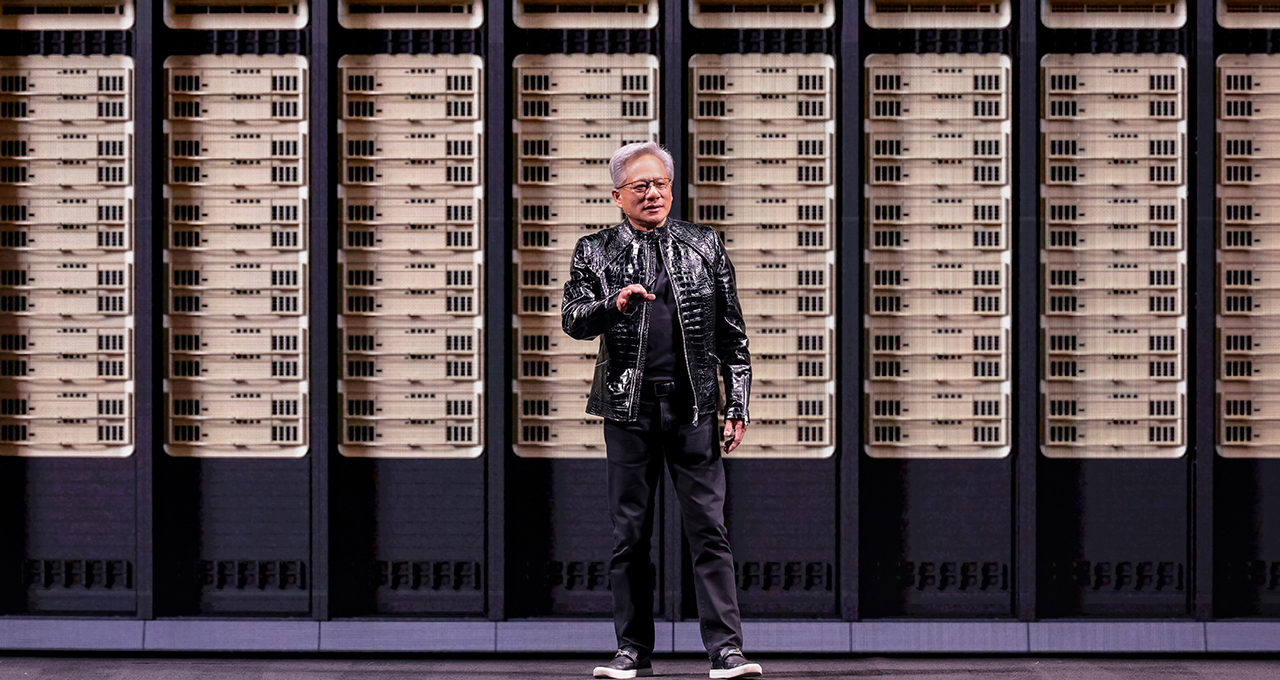
Not surprisingly, AI was at the forefront of most announcements and discussions at CES. Nvidia, one of the leading players in the field, unveiled new AI models and chips that are designed to accelerate the development of autonomous vehicles, robotics, and other applications. The company's CEO, Jensen Huang, took center stage during the keynote address, wearing a stylish leather jacket as he showcased Nvidia's latest innovations.
But Nvidia wasn't alone in showcasing its capabilities. Other companies like Intel, Advanced Micro Devices (AMD), Qualcomm, and Arm also debuted new chips that are focused on AI. Meanwhile, robotics startup Lyte AI raised $107 million in funding, while Mobileye acquired Mentee Robotics for $900 million.
Physical AI, a concept where machines interact with the physical world, was a major theme at CES. Nvidia introduced open-source AI models for humanoid robots and autonomous vehicles, while Arm announced a new Physical AI unit targeting robotics and intelligent cars. Hyundai and Boston Dynamics joined forces to bring humanoid robots to factories, further highlighting the growing interest in this area.
But it wasn't just about the tech; 2026 is shaping up to be a blockbuster year for AI funding. xAI, led by Elon Musk, raised an additional $20 billion, while Anthropic reportedly aims to raise $10 billion at a valuation of $350 billion. OpenAI and Anthropic may also go public later this year.
Quantum computing deals and funding are also heating up, with D-Wave Quantum acquiring Quantum Circuits, and Photonic raising $120 million. In the cybersecurity space, CrowdStrike acquired SGNL for $740 million, while Palo Alto Networks is reportedly eyeing Koi Security. Cyera raised $400 million at a valuation of $9 billion.
In other news, Nvidia introduced its Rubin chip with 336B transistors and 50 petaflops of performance. Red Hat pledged day-zero support for Nvidia's newest GPUs, while Qualcomm debuted new chips for robots and Windows laptops. Intel launched its first chips built on the most advanced 18A manufacturing process.
Meanwhile, in the world of robotics, Lyte AI raised $107 million, while Mobileye acquired Mentee Robotics for $900 million. Hyundai and Boston Dynamics joined forces to bring humanoid robots to factories.
The year 2026 is shaping up to be a significant one for AI, with new innovations and funding pouring into the field. As we move forward, it's clear that AI will play an increasingly important role in various industries, from healthcare to finance.
**Some of the key takeaways from CES include:**
* AI was at the forefront of most announcements and discussions at CES. * Nvidia unveiled new AI models and chips designed to accelerate the development of autonomous vehicles, robotics, and other applications. * Physical AI, a concept where machines interact with the physical world, was a major theme at CES. * 2026 is shaping up to be a blockbuster year for AI funding, with xAI raising an additional $20 billion and Anthropic reportedly aiming to raise $10 billion. * Quantum computing deals and funding are also heating up, with D-Wave Quantum acquiring Quantum Circuits and Photonic raising $120 million.
**Some of the key companies mentioned in this article include:**
* Nvidia * Intel * Advanced Micro Devices (AMD) * Qualcomm * Arm * xAI * Anthropic * OpenAI * D-Wave Quantum * Photonic * CrowdStrike * Palo Alto Networks