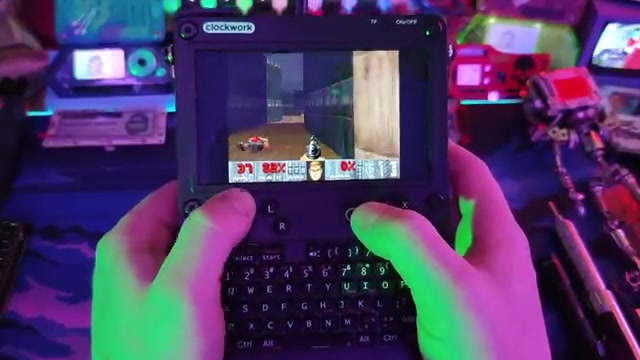
The Pocket Computer That Turns Into A Field Hacking Lab: Unpacking the Clockwork uConsole
The uConsole by Clockwork is a handheld device that has taken the world of portable hacking labs by storm. But, unlike your typical gaming console or smartphone, this device has been engineered to turn into a full-fledged field hacking lab. In this article, we'll delve into the details of how it works and what makes it so compelling for makers, field researchers, and hobbyists.
The uConsole's story begins with its core components: the Raspberry Pi CM5 compute module and the Hacker Gadgets Multiboard. These two parts work together to create a powerful computing environment that can handle everything from radio reception to Linux workflows. The Raspberry Pi CM5 is a high-performance compute module that enables simultaneous radio workflows, better emulation performance, and smoother multitasking when SDR, GPS, and peripheral tools run together.
But what really sets the uConsole apart is its ability to integrate radio functions into a handheld device. With the Multiboard, users can enjoy SDR reception, LoRa transmission, GPS location, and improved Wi-Fi all within the same compact chassis. The Multiboard integrates real-time signal processing capabilities that enable users to work with long-range wireless signals.
The uConsole is not just for radio enthusiasts or SDR aficionados; it's designed to be a versatile tool for makers, field researchers, and hobbyists who need portable access to computing power, GPS location, and communication tools. While it may not offer raw performance comparable to more specialized systems, its portability and convenience make it an excellent choice for users who value ease of use over absolute performance.
One key takeaway from the uConsole's design is that it shows how specialist hardware can be engineered into a compact device without sacrificing power or capability. This approach highlights the importance of careful trade-off decisions when designing portable systems, particularly in terms of battery life, thermal management, and antenna design.
But what about the practical limits of the uConsole? While it offers a level of portability and flexibility that's unmatched by many other field hacking devices, its performance is still limited. Battery life can range from 2 to 6 hours depending on screen brightness, radio duty cycles, and CPU load. Sustained heavy use will shorten runtime, and thermal throttling may emerge after tens of minutes under constant high load.
Furthermore, the uConsole's setup process can be challenging for those new to SDR tooling and Linux operating systems. While familiar users may find it easy to get started, others may need to invest time in learning about antenna tuning, firmware updates, and radio calibration.
In terms of availability and pricing, the uConsole falls squarely into the higher-end hobby tier due to its premium materials, high-end compute module, and specialized Multiboard. Expect significant wait times for certain components, particularly the CM5 module and the Multiboard itself, as these are considered rare and hard-to-find.
In conclusion, the Clockwork uConsole represents an innovative approach to portable hacking labs that combines raw computing power with radio capabilities, GPS location, and communication tools in a compact device. Its design highlights the importance of careful trade-off decisions when building portable systems, particularly in terms of battery life, thermal management, and antenna design.
While it may not be the best choice for users who need turnkey consumer simplicity or enterprise-grade signal capture, its portability and convenience make it an excellent option for makers, field researchers, and hobbyists who value ease of use over raw performance.