The Ultimate Windows Hacking Toolkit: v2026.9 Brings 101 Pre-Configured Tools for Reverse Engineering, Malware Analysis, and Password Cracking
If you're a security researcher, malware analyst, or penetration tester, you know that having the right set of tools is half the battle. The newly released toolkit v2026.9 is a curated collection of 101 pre-configured Windows utilities that cover everything from reverse engineering to password cracking. This is not just another random assortment of scripts—it's a carefully maintained Swiss Army knife that has been evolving since 2020, directly inspired by the legendary "Cracker Kits" of the late 2000s.
The project's latest iteration, version 2026.9, ships with two installers: a full version containing every tool, and a lite version with a leaner selection for those who just need the essentials. For deeper specialization, optional extras packs are available for Ghidra, oldies, unpacking, and VB decompilers. This toolkit is designed to complement the manuals and numbered theories on the official site, making it an invaluable resource for both novices and seasoned professionals in the cybersecurity field.
Let's dive into what makes this toolkit stand out, why it's become a staple in the hacker community, and how you can leverage it for your next security research project or CTF challenge.
A Veteran Project with a Modern Approach
While many toolkits come and go, this one has staying power. The first release was version 2020.2, published on February 17, 2020. That means the project has been actively maintained for over six years—longer than many commercial products. Each release is meticulously crafted to support both beginners and experts, with tools that are pre-configured to work out of the box. No more hunting for dependencies or tweaking environment variables; everything is streamlined for immediate use.
The toolkit includes 102 apps covering a wide range of needs—though the official list says 101 tools, the slight discrepancy is a minor detail. It features well-known names like Wireshark, x64dbg, and John the Ripper, but also includes lesser-known gems and rare utilities that are hard to find elsewhere. All tools are sourced from their official websites to ensure authenticity, though the creators wisely advise caution with anything downloaded from forum threads, as those can be tampered with.
What’s Inside the Toolkit?
The core of the toolkit is its collection of 101 pre-configured binaries. Whether you're analyzing a suspicious executable, reversing a proprietary protocol, or recovering lost passwords, you'll find a tool for the task. The toolkit is organized into functional categories, making it easy to navigate. Some of the highlights include:
– Reverse Engineering: Debuggers like x64dbg, OllyDbg (for oldies packs), and Ghidra (available as an extra) give you full control over binary analysis. Disassemblers and decompilers round out the set.
– Malware Analysis: Tools like Process Monitor, Regshot, and API Monitor help you track system changes and understand malicious behavior. Combined with unpacking tools (available as an extra pack), even packed malware becomes approachable.
– Password Cracking: From hashcat to John the Ripper, you get GPU-accelerated cracking power and dictionary/rainbow table support. For Windows-specific hashes, there are utilities like Mimikatz and Ophcrack.
– Network Utilities: Wireshark, Nmap, and TCPView are just a few examples of network analysis tools included for traffic monitoring and port scanning.
– Forensics and Data Recovery: Tools for disk imaging, file carving, and hex editing ensure you can recover data or analyze filesystems.
The lite version strips down the list to the most essential 40-50 tools, perfect for quick deployments or when storage space is at a premium. The extras packs—ghidra, oldies, unpacking, and vbdec—add even more specialized functionality. For instance, the "unpacking" pack includes UPX, ASPack, and other unpackers to help you unpack common packers.
Installation and Usability
Each release ships as a single executable installer: toolkit-{version}.exe for the full suite and toolkit-{version}-lite.exe for the lite version. The installation process is straightforward, but the real magic lies in the pre-configuration. All tools are compressed using 7-zip in a consistent format: {name} - {version}.7z. This naming convention makes it trivial to manage versions and updates.
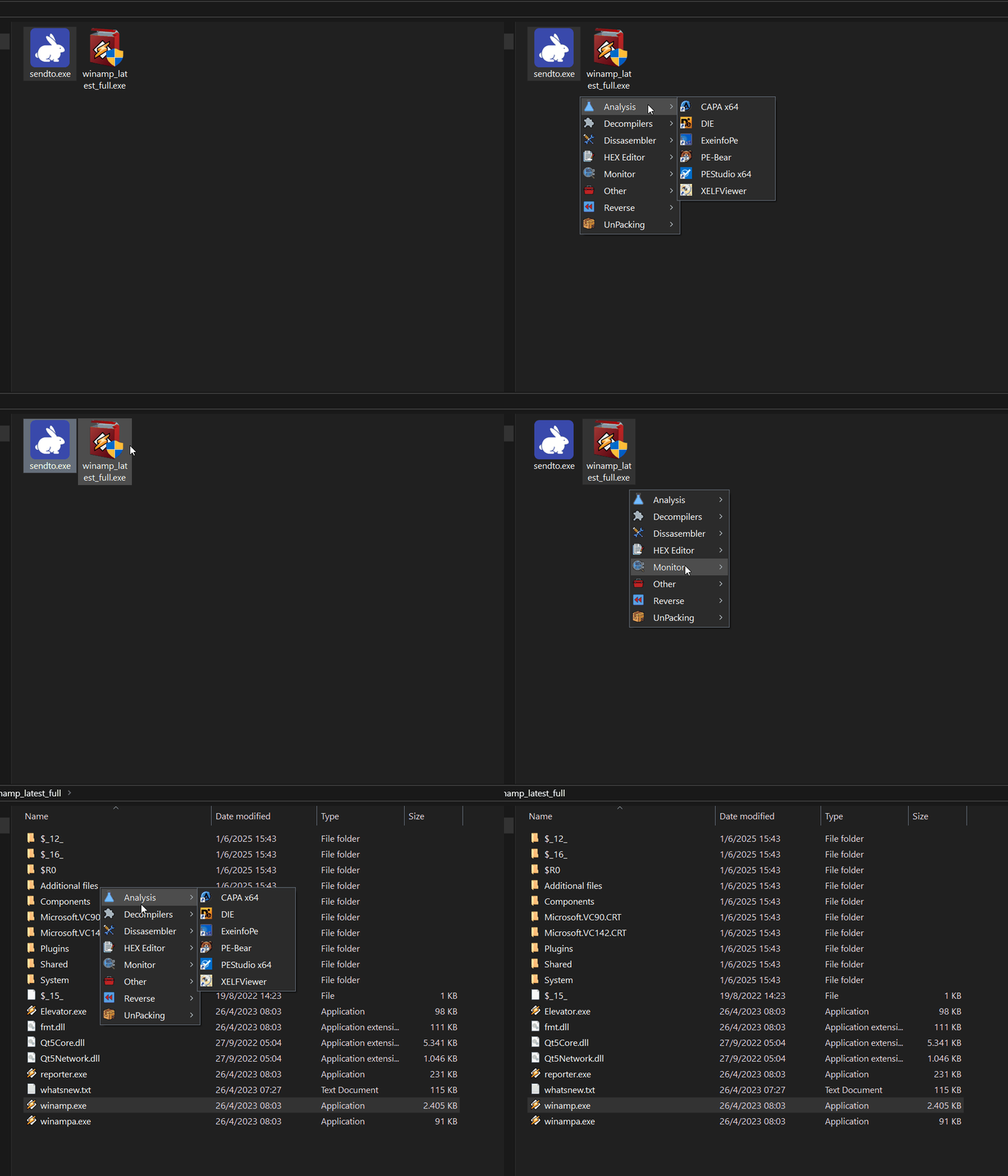
One of the standout features is automatic updates. The toolkit includes a built-in updater that checks for new versions of both the toolkit and its individual components. This ensures you're always working with the latest security patches and improved tools. Additionally, the installer integrates context menu entries, allowing you to right-click on a file and immediately launch relevant analysis tools—a huge time-saver during malware triage.
For developers and contributors, the project is open for Pull Requests. The team encourages community involvement, but for major changes, they ask that you first create an Issue for discussion. This open-source approach keeps the toolkit alive and constantly improving, with contributions from experts around the world.
Why It Matters in Today’s Cybersecurity Landscape
In an era where data breaches and ransomware attacks dominate headlines, having a reliable toolkit is not a luxury—it's a necessity. The toolkit v2026.9 bridges the gap between expensive commercial suites and fragmented open-source utilities. It serves as a comprehensive resource for incident responders, penetration testers, and security enthusiasts who need to act fast without sacrificing quality.
The inclusion of both well-known and rare tools is particularly valuable. Many security researchers spend hours searching for a specific utility that they remember from a forum post or a conference talk. With this toolkit, those rare finds are already included and tested. The project even mirrors its numbered theories from the site, providing a cohesive learning path that ties theoretical knowledge to practical application.
Security professionals will appreciate the careful attention to provenance. All tools are sourced from official websites, which reduces the risk of compromised binaries—a common concern in the hacking community. The cautionary note about forum threads is a subtle but important reminder that even in the security world, you must verify your sources. The toolkit does the legwork for you, but the creators still encourage a healthy dose of skepticism.
Who Should Use This Toolkit?
Whether you're a student just starting in cybersecurity or a veteran malware analyst, this toolkit has something for you. Novices will benefit from the pre-configured environment that removes the initial setup barriers, letting them focus on learning the tools themselves. Experts will appreciate the breadth and depth of the collection, along with the ability to customize and extend it via extras packs and pull requests.
The toolkit is particularly useful for CTF (Capture The Flag) competitions, where having a ready arsenal can save precious minutes. It's also a great resource for teaching reverse engineering in academic settings. And for those working in incident response, having a portable toolkit (the lite version can be run from a USB drive) means you can quickly deploy it on a compromised system without installing anything permanently.
Conclusion
The toolkit v2026.9 is more than just a collection of software—it's a curated experience that reflects years of community knowledge, inspired by the classic Cracker Kits but modernized for today's threats. With 101 pre-configured tools, automatic updates, and context menu integration, it streamlines your workflow and elevates your hacking, reversing, and cracking capabilities. Whether you opt for the full installer, the lite version, or augment it with extras packs, this toolkit deserves a place in every cybersecurity professional's arsenal. Visit the official releases page to download your copy and join the growing community of users who swear by this veteran project.