# The Hidden Legal Minefield of Your Ring Doorbell: When Home Security Becomes a £100,000 Hackers' Trap
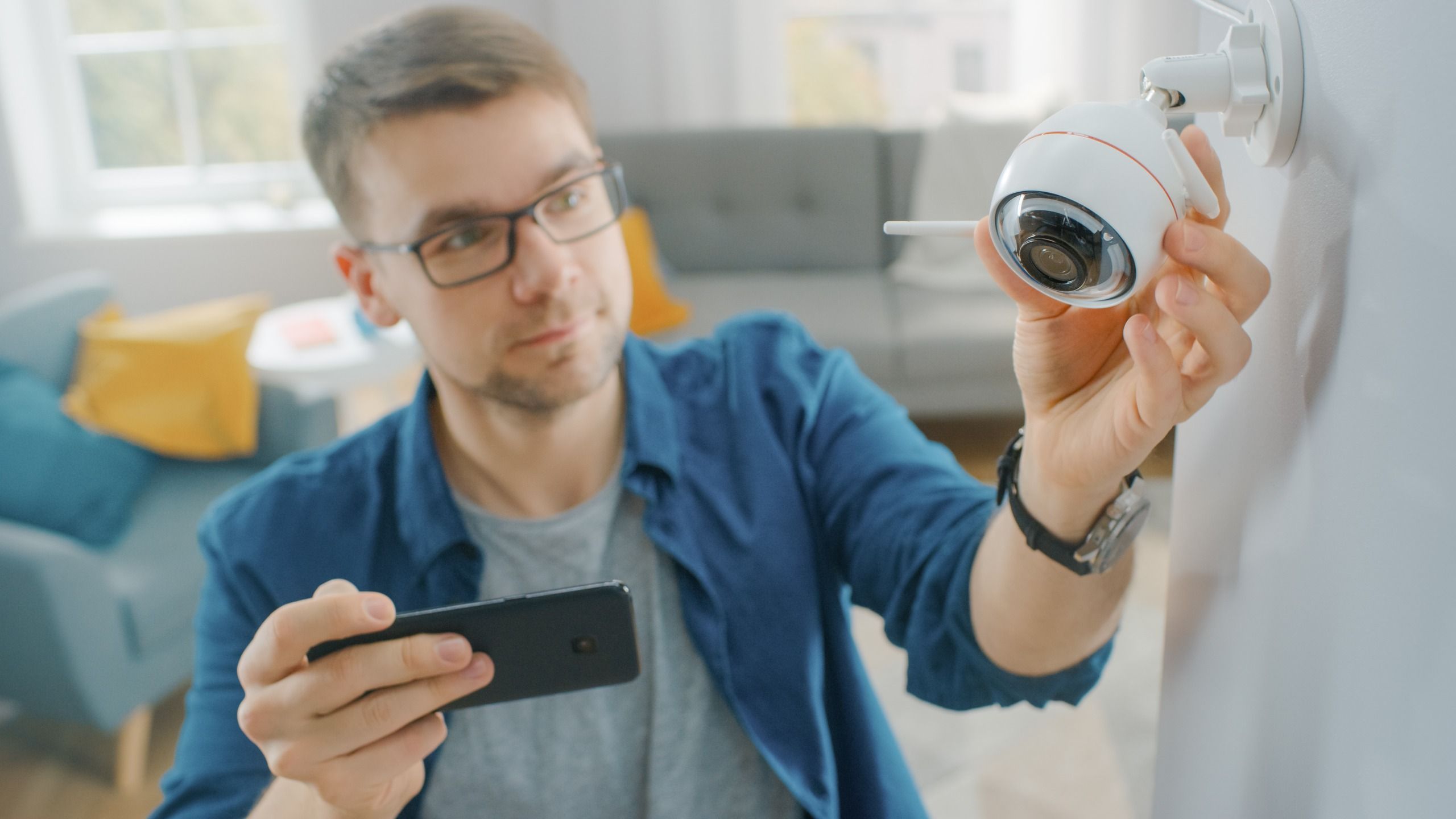
In an era where smart home security has become as commonplace as Wi-Fi routers, a landmark UK case has exposed the terrifying legal vulnerabilities lurking in your innocent-looking video doorbell. When Jon Woodard proudly installed a Ring doorbell and shed camera at his Oxfordshire home, he never imagined his "cutting-edge" security setup would lead to a £100,000 legal nightmare—and a watershed moment for domestic surveillance law that every tech enthusiast needs to understand.
The case, which sent shockwaves through the smart home community in 2021, revealed a dangerous gap between what homeowners think their devices are legally allowed to do and what data protection regulators actually enforce. As facial recognition becomes standard and social media posting of security footage explodes, the legal risks surrounding domestic surveillance have multiplied dramatically, creating a perfect storm for unsuspecting homeowners who treat their cameras like personal broadcast networks rather than targeted security tools.
---
## The Oxfordshire Case That Changed Everything
The dispute between Woodard and his neighbour, Dr Mary Fairhurst, began innocently enough with a home tour invitation. But when Fairhurst discovered that Woodard's shed-mounted camera pointed directly at her property, she was, according to the court judgment, "alarmed and appalled." The case, heard at Oxford County Court, revealed something that would reshape how we think about domestic surveillance: Judge Melissa Clarke ruled that the devices "unjustifiably invaded" Fairhurst's privacy and breached both the Data Protection Act 2018 and UK GDPR legislation.
What makes this case particularly significant for tech users is the court's specific focus on audio data. Judge Clarke singled out the captured conversations as "more problematic and detrimental than video data" because the devices were recording people who had absolutely no idea they were being listened to or that their voices were being processed by the system. The final bill for Woodard? A staggering £100,000 in damages and fines—a cautionary tale that has every smart home owner checking their camera angles.
## The Legal Framework: It's Not Just About Hacking Prevention
Digital privacy expert Hannah Hart of Pro Privacy noted that while this case doesn't create a binding legal precedent, it "does continue an ongoing conversation about our changing attitude towards domestic surveillance—and how normalised it has become in our communities." This normalization is precisely what makes the legal dangers so treacherous. Homeowners are treating sophisticated surveillance equipment like household appliances when, in reality, they're operating what the law considers data processing systems.
Lisa Sweetman, Partner specialising in Data Protection at legal firm Knights, explained to TechRadar that "in very broad terms, those using this kind of surveillance technology must have a lawful basis for doing so." This means conducting data protection impact assessments or risk assessments, implementing clear signage, posting detailed privacy notices, and being prepared to respond to questions about how you're using data collected by your cameras.
The so-called 'domestic purposes exemption' might seem like a safety net, but Will Richmond-Coggan, Partner and Head of Data and Privacy Disputes at Freeths, warns that its application is severely limited. "It is recommended that if a user wishes to rely on the domestic exemption from data protection law, they should ensure that the field of view of the camera does not extend beyond the perimeters of their property," he says. If you want to monitor your car parked on the street, you're legally operating CCTV in a public space and become a "controller of any personal data collected."
## The Social Media Trap: Broadcasting Your Way Into Legal Trouble
The explosion of social media sharing of security footage has created a new cybersecurity-adjacent threat: defamation and harassment lawsuits. Knights' Lisa Sweetman offers a stark warning: "Ultimately, the fact that someone appears in footage recorded on your property does not give you the right to publish it on social media." Yet thousands of homeowners regularly post footage to Facebook, TikTok, and local community groups to identify "suspicious figures."
This dangerous practice extends far beyond data protection violations. Gavin Wilson, Director of Physical Security and Risk at cyber and physical security company Toro Solutions, cautions that "a camera only gives you part of the picture. It can show you that someone was outside a property at a particular time, but it can't necessarily tell you who they are, why they were there or whether they've done anything wrong." Posting such footage can trigger defamation claims under the Defamation Act 2013, harassment charges under the Protection From Harassment Act 1997, and even accusations of "doxxing" if your post encourages others to identify or track down the person featured.
Even more seriously, uploading footage of accidents, crime scenes, or ongoing police investigations can lead to contempt of court charges or interfering with the course of justice by prejudicing potential juries. The Information Commissioner's Office (ICO), which received 76,743 data protection complaints in 2025/2026—up dramatically from 42,315 the previous year—is increasingly focused on domestic CCTV. An ICO spokesperson emphasised: "Children's personal information warrants particular care and protection. Any sharing should have a clear and justifiable reason and should not unnecessarily infringe the privacy rights of those captured."
## Facial Recognition: The New Frontier of Legal Risk
The rapid emergence of facial recognition and AI technologies in home security devices has opened an entirely new legal can of worms. "Considerable care should be used in deploying facial recognition technology in a domestic setting for security," warns Freeths' Richmond-Coggan. "It involves processing of special category biometric identifiers, and it is unlikely that a domestic user will be able to meet the stringent requirements around such use."
Lisa Sweetman adds that a full Data Protection Impact Assessment would be required to use facial recognition for identifying potential criminals, noting that "using facial recognition simply to identify known burglars will be difficult to justify unless there is a clear and lawful basis for doing so." Beyond the privacy concerns, there are serious accuracy questions. Toro Solutions' Wilson points out that "facial recognition can be a useful security aid, but it isn't proof of identity and people shouldn't assume that because the security camera has produced a match, it must be correct."
## Practical Protection: The Common-Sense Security Approach
The good news is that staying legal isn't rocket science. Modern security cameras include built-in privacy masking and activity zones that can black out public areas or neighbouring properties. Everett Lupton of law firm Slaughter & Lupton recommends: "Most modern cameras allow people to adjust viewing angles, create privacy zones or limit motion detection to specific areas, and I would use those settings wherever possible."
Other protective measures include being conscious about audio recording, storing footage on local MicroSD cards or hard drives rather than cloud storage for better data control, and when necessary, blurring faces before posting anything publicly—especially children's faces. As Ali Park, country manager at security camera manufacturer Reolink, wisely concludes: "The most sensible approach is to collect the minimum footage necessary for the safety of you and yours, manage it responsibly and store this footage for as little time as possible."
## Conclusion: Your Camera Is a Shield, Not a Weapon
The line between legitimate home security and illegal surveillance is thinner than most tech enthusiasts realise. Woodard's £100,000 lesson serves as a stark reminder that smart home technology carries smart home responsibility. Treat your camera as a targeted perimeter shield rather than a public broadcasting network, respect your neighbours' privacy boundaries, and remember that the cybersecurity world's golden rule applies perfectly here: just because you can capture, process, and share data doesn't mean you legally should. In the era of ubiquitous surveillance, the smartest hackers know that the most critical vulnerability isn't in the device—it's in the owner's understanding of the law.