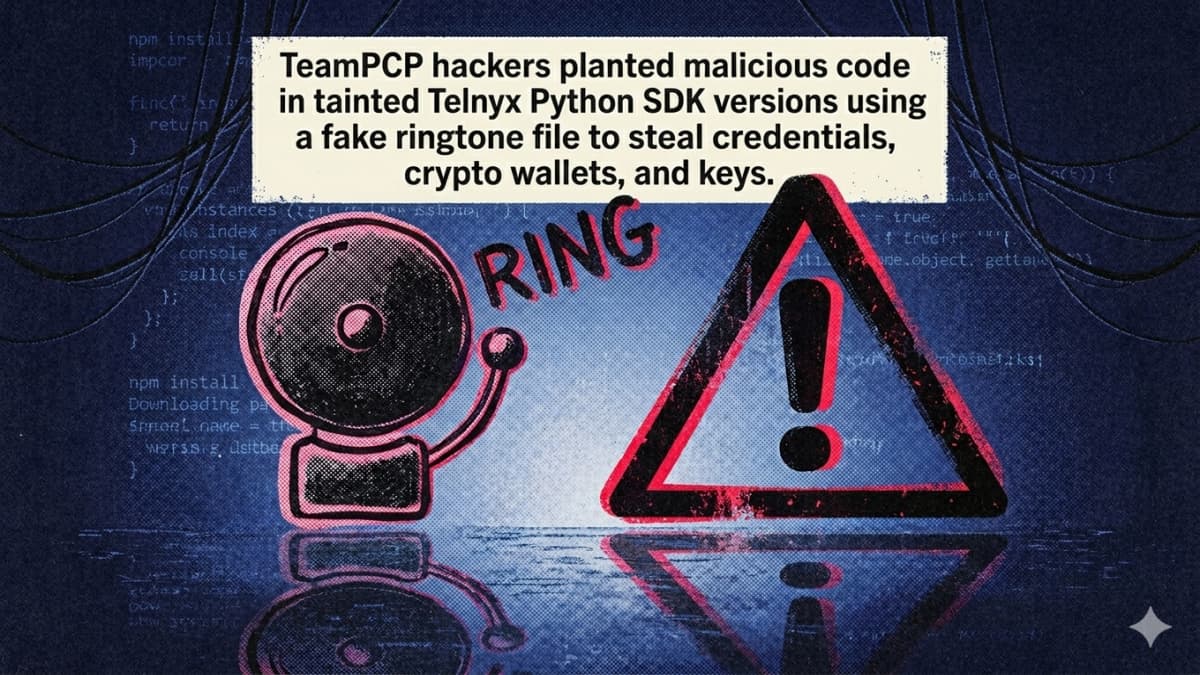
**H1:** "TeamPCP's Sneaky Heist: How a Fake Ringtone File Exploited Telnyx SDK Vulnerability to Steal Sensitive Data"
**Intro** In the ever-evolving world of cybersecurity, threat actors continually find new ways to compromise sensitive data. Recently, researchers discovered that TeamPCP utilized a clever tactic to steal Google Chrome credentials by exploiting a vulnerability in the Telnyx Software Development Kit (SDK). This devious method involved creating a fake ringtone file, which may seem innocuous at first glance, but was actually a sophisticated attack vector.
**The Tainted Telnyx SDK** Telnyx is a cloud-based communications platform that provides APIs for developing custom communication applications. Unfortunately, in 2022, researchers discovered that the Telnyx SDK contained a vulnerability that allowed attackers to inject malicious code into the system. This security flaw was exploited by TeamPCP to deploy malware and steal sensitive data from unsuspecting users.
**The Fake Ringtone File** To execute their plan, TeamPCP created a fake ringtone file that appeared harmless but actually contained malicious code. When this file was downloaded onto an affected device, it triggered the Telnyx SDK vulnerability, allowing TeamPCP to inject malware and gain unauthorized access to sensitive data. The attackers targeted Google Chrome users, stealing login credentials and other sensitive information.
**Malware Deployment and Data Stealing** Once inside the system, the injected malware enabled TeamPCP to deploy additional malicious software, including the Qilin ransomware variant. This malware was specifically designed to steal Google Chrome credentials, as well as other sensitive data stored on the affected device. The attackers could then use this stolen information for nefarious purposes, such as unauthorized access to online accounts or selling the data on darknet markets.
**Vulnerability Exploitation and Data Breach** The exploitation of the Telnyx SDK vulnerability by TeamPCP serves as a stark reminder of the importance of maintaining robust cybersecurity measures. In today's digital landscape, even seemingly innocuous files can pose significant security risks if exploited by skilled threat actors. The data breach resulting from this attack highlights the need for developers to prioritize security when building software and APIs, and for users to remain vigilant in protecting their sensitive information.
**Conclusion** The TeamPCP attack underscores the importance of cybersecurity awareness and proactive defense measures. As we continue to navigate the complexities of the digital world, it is essential that developers, researchers, and users work together to identify and mitigate vulnerabilities before they can be exploited by malicious actors. By staying informed about emerging threats and best practices for data protection, we can reduce the likelihood of future attacks like this one.
**Recommendations**
* Developers should prioritize security when building software and APIs. * Users must remain vigilant in protecting their sensitive information. * Regularly update software and plugins to prevent exploitation of known vulnerabilities. * Implement robust cybersecurity measures to detect and respond to potential threats.