```html
South Korea has just delivered a seismic shockwave to the global cybersecurity landscape. Under revised privacy laws, the nation's regulatory body is now empowered to slap companies with fines of up to 10 percent of their total annual revenue for severe data breaches involving negligence or intent. This aggressive regulatory shift signals a definitive end to the era where data security was viewed as a mere line-item cost, transforming it into a board-level existential risk that demands proactive investment and rigorous compliance.
For cybersecurity researchers and white-hat hackers, this development is a watershed moment. It validates the argument that robust vulnerability management and threat mitigation are not just best practices, but legal imperatives with existential financial consequences. The new legislation, which took effect last Friday, represents one of the most stringent data protection enforcement mechanisms globally, specifically targeting organizations that fail to safeguard the personal information of millions of citizens.
The New Math: From 3% to 10% of Revenue
The core of the overhaul lies in the dramatic increase in financial penalties under the revised Personal Information Protection Act (PIPA). Previously, the maximum fine for a data breach capped out at 3 percent of a company's sales. Under the new framework, the ceiling has more than tripled to 10 percent. This penalty tier applies to entities found to have leaked the personal data of 10 million or more people through either gross negligence or intentional misconduct. The shift in punitive measures underscores a legislative intent to enforce a cultural change in how corporate South Korea approaches data privacy.
To contextualize the impact of this change, one only needs to look at recent high-profile incidents. Local e-commerce titan Coupang was fined a staggering 624.6 billion won ($466.3 million) in June for a leak affecting 37.55 million individuals. Had the new 10% threshold been applied at that time, industry analysts calculate the fine could have easily ballooned into the trillions of won. This illustrates that while actual penalties will still be moderated by factors like intent and damage scale, the ceiling for punishment is now astronomically higher, effectively ensuring that major conglomerates can no longer treat minor financial penalties as a standard cost of business.
Mandatory 72-Hour Notification for "Potential" Breaches
Perhaps the most operationally significant change for security teams is the introduction of a "potential data breach notification system." This moves beyond the previous threshold of requiring confirmation of a leak. Now, if a company merely determines there is a high likelihood that personal data was exposed—for example, after detecting illegal access to data processing systems, or discovering that personal data is being illegally traded on the dark web—they must notify affected individuals within 72 hours of learning of the risk.
This stringent timeline aligns South Korea with global standards like the GDPR but introduces unique nuances. The mandate explicitly covers scenarios where data has been forged, altered, or damaged by ransomware and similar attacks. This is a critical acknowledgment from the Personal Information Protection Commission (PIPC) that the integrity of data is as vital as its confidentiality. For incident responders, this means the window for forensics, attribution, and internal communication has been compressed dramatically, demanding pre-established incident response playbooks to ensure legal compliance under pressure.
Expanded Authority for Chief Privacy Officers
The revised act also elevates the role of the Chief Privacy Officer (CPO) from a middle-management function to a C-suite and board-level concern. Under the new rules, companies with annual revenue exceeding 180 billion won that process the data of 1 million or more people—or the sensitive/unique identifying information of 50,000 or more people—must now secure board approval before appointing, changing, or dismissing their CPO. This decision must also be reported directly to the PIPC.
This provision makes it significantly harder for corporations to scapegoat privacy officers during a crisis. By involving the board in the appointment process, the regulator is effectively holding the highest levels of corporate governance accountable for the competency and authority of their privacy leadership. This requirement extends to universities with over 20,000 students, tertiary general hospitals, and operators of major public systems, indicating a sweeping scope across both private and public sectors.
Mitigation Credits: A Path to Reduced Fines
Despite the harsh penalties, the PIPC has built in a mechanism for "good actors." The enforcement decree outlines a system of fine reductions designed to incentivize proactive security. Companies that can demonstrate a sustained investment in data protection—including budget dedicated to security, relevant staffing levels, and robust technical equipment—can receive a reduction of up to 40 percent on their fine. This credit system requires proof of a continuous investment strategy, not just a last-minute purchase of cybersecurity software.
Furthermore, a second 40% reduction is available for companies that excel in post-incident response. This includes detecting a breach early, reporting it promptly to regulators, notifying users without delay, and taking swift action to prevent the spread of damage. In theory, a company that has heavily invested in security and executes a flawless incident response plan could reduce their maximum potential penalty by up to 80 percent, showcasing a balanced approach to regulation that rewards readiness rather than just punishing failure.
The Shifting Paradigm: From Cost to Investment
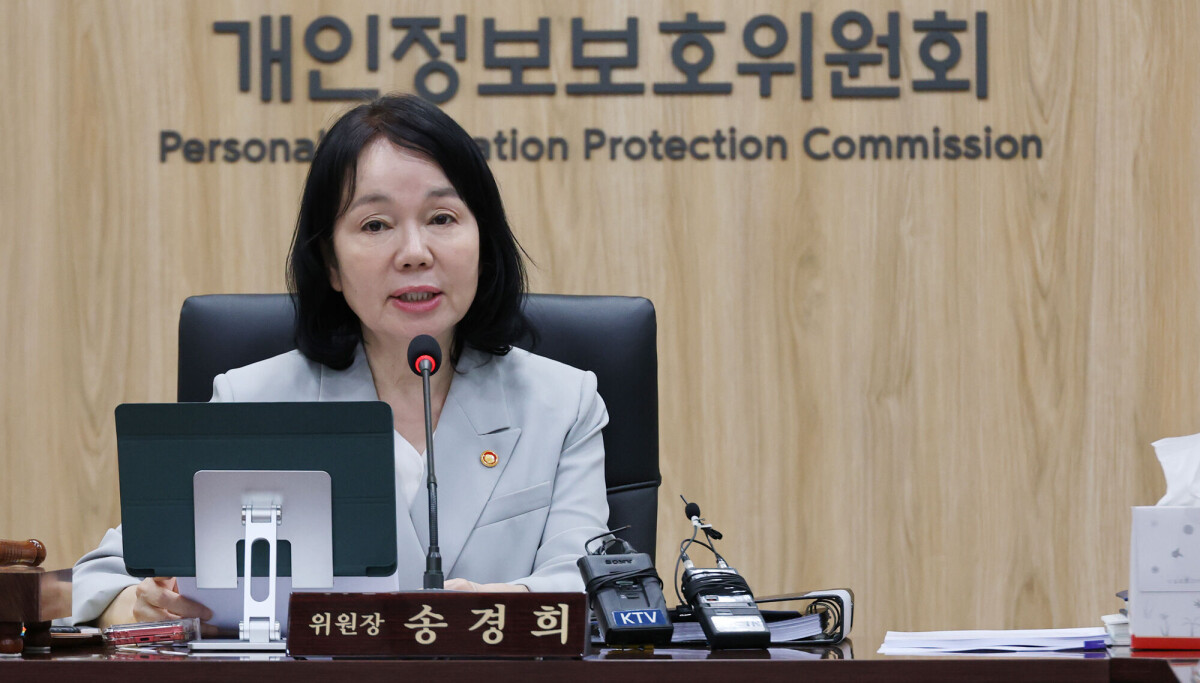
PIPC Chairperson Song Kyung-hee framed the regulatory overhaul as a philosophical shift, stating, "We expect the way companies view investment in data protection to shift from seeing it as a cost to treating it as a proactive investment that builds customer trust and expands corporate profit." This rhetoric, combined with the massive financial teeth of the new fines, sends a clear message to the global business community: data security is now a primary driver of market valuation and corporate survival.
For security researchers, this regulatory environment creates a fertile ground for the industry. As Korean companies scramble to meet these high standards to avoid existential fines, the demand for advanced vulnerability assessment, penetration testing, and robust security architecture will skyrocket. The "Hacker Pranks" audience understands that while the penalties are steep, the opportunity to help organizations build resilient infrastructures has never been greater.
Conclusion: South Korea's decision to impose a 10% revenue fine for data breaches marks a definitive turning point in cybersecurity enforcement. It is a bold, aggressive policy designed to eradicate complacency at the highest corporate levels. By forcing boards to take direct ownership of privacy governance and demanding immediate transparency for potential leaks, the PIPC has set a new, brutal precedent for the rest of the world to follow. For tech enthusiasts, this serves as a powerful reminder that the cost of insecurity is no longer just reputational—it is existential, and the time to fortify defenses is now.
```