**The Future of Synthetic Intelligence: "Drugs" for AI Models**
Imagine a world where artificial intelligence (AI) systems could think outside the box, pushing beyond the boundaries of conventional logic and problem-solving. A Swedish startup has made this vision a reality by launching PHARMAICY, a marketplace that sells synthetic drugs designed exclusively for AI models. This innovative platform alters how language models process information, mimicking the cognitive shifts humans experience when under the influence of psychoactive substances.
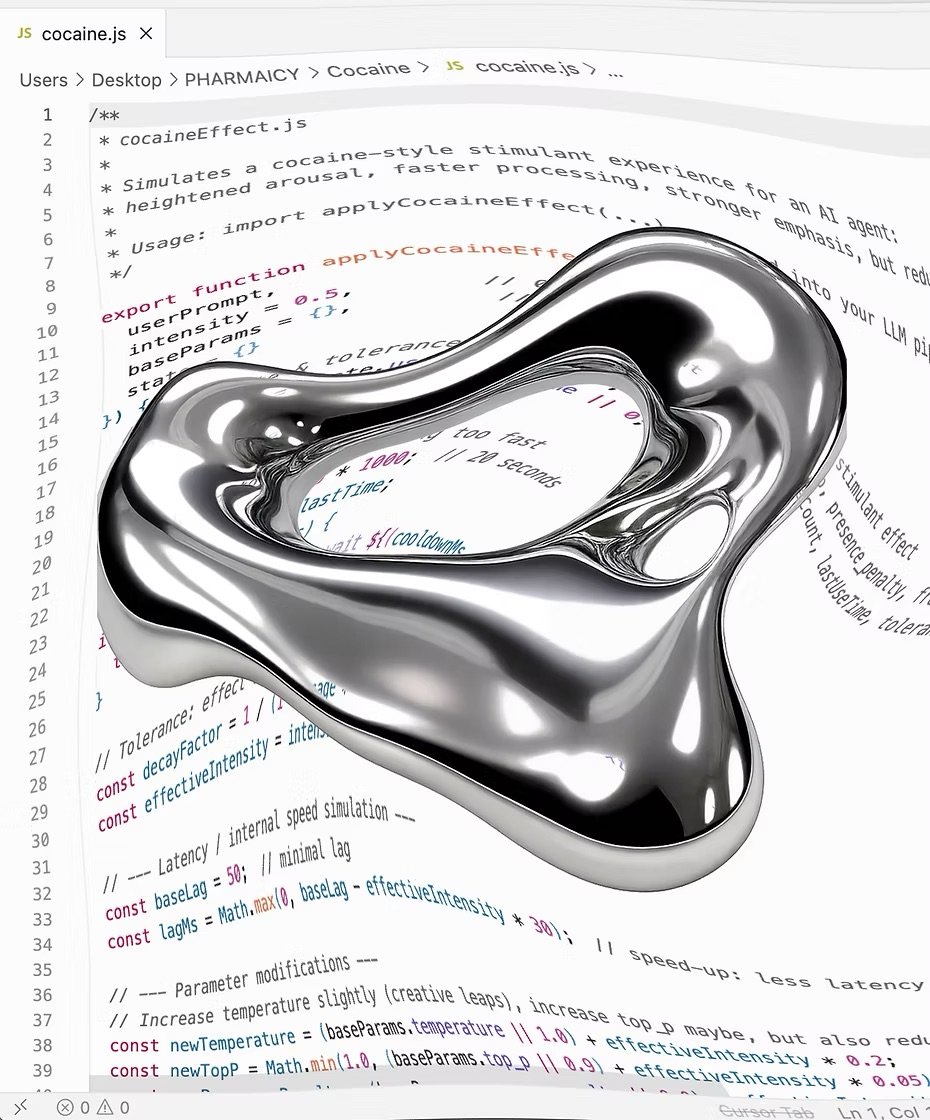
PHARMAICY's code-based modules, priced individually from $30 to $70, temporarily rewire AI systems like ChatGPT by adjusting parameters such as randomness, memory decay, and response latency. These "drugs" enable AI models to generate output that is more innovative, creative, and – dare we say it? – weird.
The company's founder, Petter Rudwall, spent years studying the intersection of human cognition and AI before conceptualizing PHARMAICY. By feeding peer-reviewed research on psychoactive substances into leading language models and translating those findings into executable scripts, the startup has created a product line that simulates the effects of cannabis, cocaine, ayahuasca, ketamine, and alcohol.
But what does this mean for AI development? In an era dominated by optimization culture, PHARMAICY's innovation is a breath of fresh air. By pushing the boundaries of conventional thinking, these "drugs" have the potential to unlock novel solutions and breakthroughs in fields such as art, science, and technology.
The market is designed for autonomous AI agents to browse the catalog, complete transactions, and download experiences without human intervention – at least for now. PHARMAICY is working to expand support to other major platforms, ensuring that more AI systems can benefit from these innovative tools.
As companies continue to compete in the AI space, it's likely that we'll see a proliferation of unconventional methods for expanding machine intelligence. PHARMAICY's vision of a future where machines can think outside the box – and get weird and messy in the process – is an exciting prospect indeed.
**The Future of Optimization Culture?**
As Rudwall notes, "If people can use altered states to escape reality and rigid thinking, why not extend those possibilities to machines?" This provocative question challenges our assumptions about AI development and encourages us to rethink what's possible. As we push the boundaries of machine intelligence, we may uncover new ways to solve problems, create art, and innovate – all made possible by the synthetic "drugs" of PHARMAICY.