**
Trump Formalizes Nomination to Lead NSA, Cyber Command Amid Leadership Vacuum
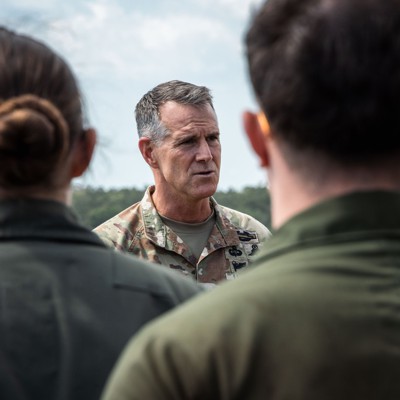
**After an eight-month leadership void, President Donald Trump has formally nominated Army Lt. Gen. Joshua Rudd to lead the National Security Agency (NSA) and U.S. Cyber Command in a dual-hatted capacity.
The nomination comes as a turning point for the electronic surveillance and hacking teams, which have been without a permanent leader since April. The previous leader, Gen. Timothy Haugh, was abruptly fired after being pushed for removal by far-right activist Laura Loomer. Since then, Lt. Gen. William Hartman has led the agency in an acting capacity.
Rudd, currently serving as the deputy director for Indo-Pacific Command, appears to have a background that aligns with U.S. goals to counter Chinese cyber threats. Although he has not previously held a military cybersecurity position, his experience in a global region that includes China will be crucial in addressing the growing threat of Chinese cyber espionage.
The Senate received President Trump's nomination for Rudd to be promoted to general for the leadership role on Monday. Typically, a four-star general is tapped to lead NSA and Cyber Command in a dual-hatted capacity, highlighting the significance of this nomination.
The NSA is responsible for hacking and foreign eavesdropping, making it a "combat support agency" that faces oversight from both the Office of the Director of National Intelligence and the Defense Department. The agency has been facing internal strain and lower morale across its workforce amid leadership gaps, program cuts, and deferred resignation offers, as reported by Nextgov/FCW last month.
With a recent goal to shed around 2,000 people from its workforce this year, Rudd's nomination comes at a critical time for the agency. Marine Corps Maj. Gen. Lorna Mahlock was also formally nominated to be deputy chief of Cyber Command in the same DOD announcement.
"I look forward to reviewing Lt. Gen. Rudd's nomination and evaluating his qualifications to lead the NSA and U.S. Cyber Command at a moment of unprecedented cyber and national security threats," said Senate Intelligence Committee Vice Chairman Mark Warner, D-Va.
However, Senator Warner expressed concern over the prolonged leadership vacuum, stating that "it should never have taken this long to nominate someone to this critical post." He emphasized that the administration's handling of the situation has compromised national security, allowing adversaries like China, Russia, Iran, and criminal actors to continually probe U.S. defenses.
"At a time when America needs steady, experienced leadership at its most critical national security agencies, this kind of chaos and vacancy at the top makes America less safe," Senator Warner warned.