**Disrupting the Dark Web: Authorities Crack Down on SocksEscort Proxy Service**
The dark web has long been a breeding ground for cybercriminals, providing a platform for illicit activities to thrive. Recently, authorities in the US and Europe have made a significant breakthrough in disrupting one such platform, SocksEscort, which used the AVrecon botnet to compromise over 360,000 devices worldwide. The operation, dubbed "Operation Lightning," was a collaborative effort between law enforcement agencies in the US, Europe, and several other countries, aimed at dismantling the SocksEscort proxy service and its associated infrastructure.
**The Rise of SocksEscort**
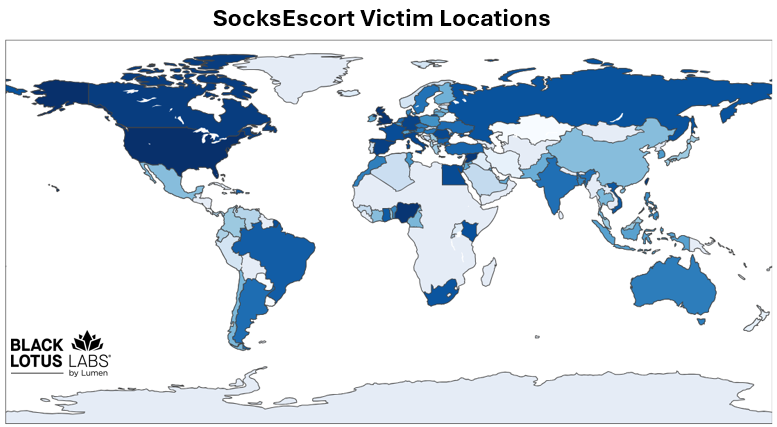
SocksEscort was a malicious proxy service that allowed cybercriminals to route traffic through compromised systems, making it easier for them to engage in illicit activities such as ransomware operations, DDoS attacks, and the distribution of child sexual abuse material. The service, which was active since 2020, had compromised more than 369,000 routers and IoT devices across 163 countries, providing over 35,000 proxies to customers. The compromised devices were infected through a vulnerability in the residential modems of a specific brand, allowing customers to pay for licenses to abuse these infected devices, hiding their original IP addresses to engage in various criminal activities.
**The AVrecon Botnet**
The AVrecon botnet, which was used to power the SocksEscort proxy service, was a complex operation that infects small-office/home-office (SOHO) routers, deploying a Linux-based Remote Access Trojan (RAT) dubbed "AVrecon." The malware was written in C to ensure portability and designed to target ARM-embedded devices. The experts discovered that the malicious code had been compiled for different architectures, allowing it to evade detection. The botnet was marketed exclusively to criminals and composed solely of compromised edge devices, posing a significant threat to global cybersecurity.
**The Operation**
Operation Lightning, which was launched on March 11, 2026, was a coordinated effort to disrupt the SocksEscort proxy service and its associated infrastructure. Authorities seized 34 domains and 23 servers in seven countries and froze $3.5 million in cryptocurrency while disconnecting infected devices from the network. An investigation led by Europol found that the compromised devices were mainly residential routers exploited through vulnerabilities, highlighting the importance of regular firmware updates to protect against such exploits.
**The Impact**
The disruption of the SocksEscort proxy service and its associated infrastructure has significant implications for global cybersecurity. The operation demonstrates the importance of international collaboration in disrupting cybercrime networks and highlights the need for regular firmware updates to protect against vulnerabilities. The authorities' actions have also sent a strong message to cybercriminals, making it more difficult for them to operate in the shadows.
**Conclusion**
The disruption of the SocksEscort proxy service and its associated infrastructure is a significant victory for global cybersecurity. The operation demonstrates the importance of international collaboration in disrupting cybercrime networks and highlights the need for regular firmware updates to protect against vulnerabilities. As cyber threats continue to evolve, it is essential for authorities and organizations to work together to stay ahead of the threat landscape.
**Recommendations**
To protect against such exploits, users and vendors are advised to:
* Update the firmware of their devices regularly * Use strong passwords and enable two-factor authentication * Keep software and systems up-to-date with the latest security patches * Monitor network activity and report any suspicious behavior to the authorities
By taking these precautions, individuals and organizations can reduce the risk of being compromised by malicious proxy services like SocksEscort.