**What's Happening to Discord Is Going to Happen to All Your Favorite Websites**
The world of digital communication is abuzz with controversy this week, thanks to a new move from popular messaging app Discord. In an effort to combat child predators and violent extremists on its platform, the company has announced new safety features that will prohibit users under 18 from speaking in audio spaces and restrict their access to channels and images containing mature content.
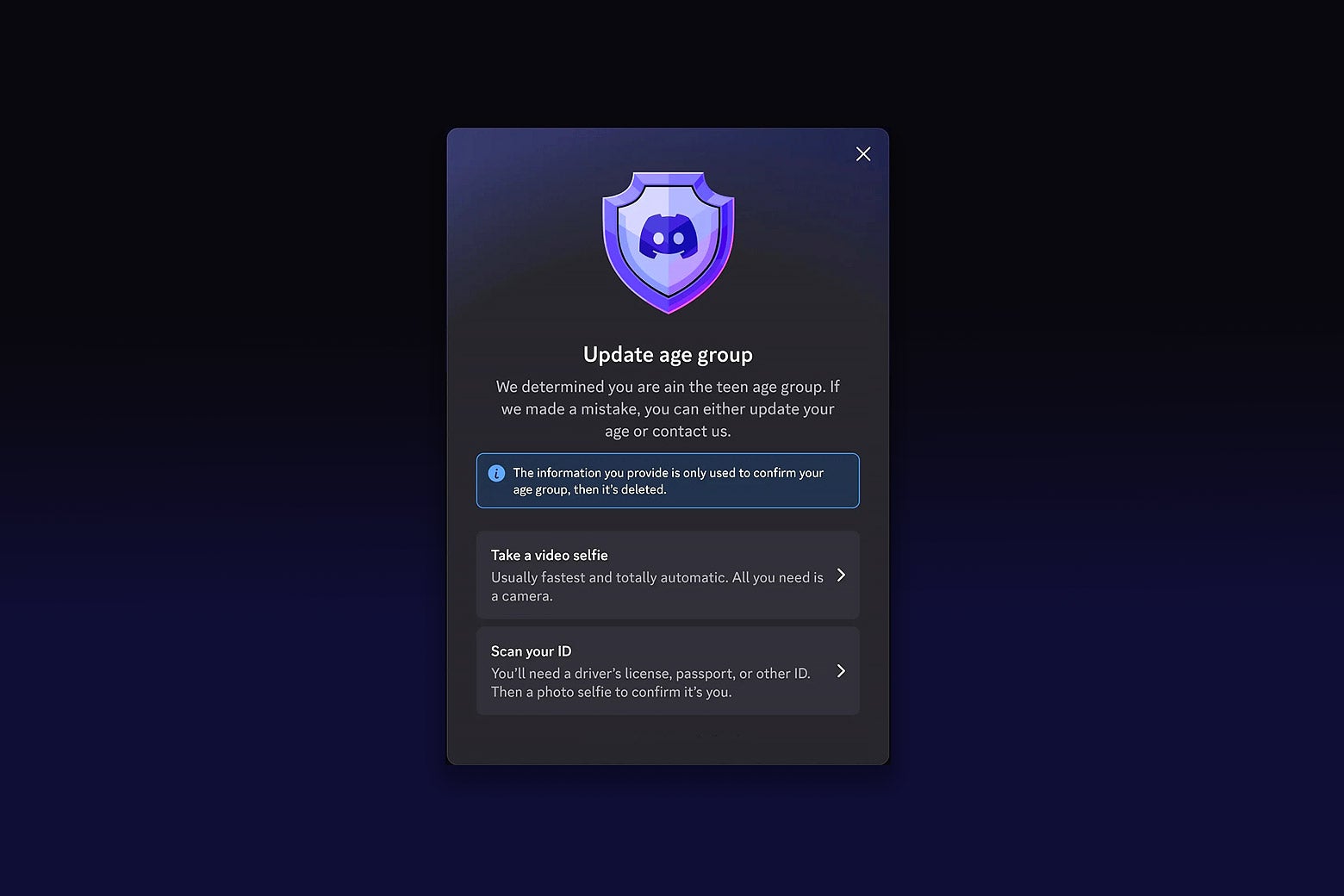
While these measures may seem reasonable at first glance, it's the way they're being implemented that has sparked outrage. Starting next month, every Discord user – regardless of age – will be treated as a "teen" by default unless they undergo a facial recognition scan or upload a government ID for age verification purposes. This move has led to widespread criticism from users who are exploring alternative platforms and canceling their subscriptions to Discord's premium Nitro service.
But the issue at hand goes far beyond Discord itself. The company's decision to introduce these age-verification measures is, in fact, a symptom of a larger problem: the haphazard age-gating regulations being passed by governments worldwide. From the UK's Online Safety Act to Australia's Social Media Minimum Age Act, these laws are forcing digital communities to implement invasive verification methods – and it won't be long before every major online space follows suit.
A quick glance at Discord's initial press release offers a clue about what's driving this trend. The company notes that it piloted its new age-verification system last year in the UK and Australia, where these regulations are already in place. It just so happens that both countries have passed sweeping laws targeting teen users on social media platforms.
The UK's Online Safety Act, for example, requires large community platforms like Discord to impose "highly effective" age-verification measures – including personal phone and bank data, government IDs, and face-scanning software – if there's any risk that an underage user might be exposed to mature content. In Australia, the Social Media Minimum Age Act bans all under-16 Aussies from having social accounts, while requiring platforms that may expose users to especially harmful content to employ government or face identification.
Even though Discord isn't subject to Australia's act – which only applies to 10 specific apps like Facebook and Twitch – it decided to extend these limits to its Australian users anyway. This decision is a prime example of the direct effect of and indirect fallout from these laws. By forcing platforms to implement invasive verification methods, governments are effectively silencing online communities and stifling free speech.
But this isn't just a problem for Discord or Australia. The UK's Online Safety Act is so sweeping that it even ranks Wikipedia as a high-risk platform on par with X and Instagram, risking the anonymous moderators' identities. Other countries – like Brazil, France, Malaysia, and Norway – have similar verification laws on the books, while at least a dozen major countries (including the European Union) are marking up legislation of their own.
Meanwhile, multiple US states are already requiring social media age-verification software, with a national law being considered with bipartisan approval. For many platforms, the easiest solution is to either impose all-around standards or outright block regional access – instead of geofencing restrictions to specific borders. Discord doesn't want to lose user bases anywhere in the world, and it's hoping that universal age-tracking rules will keep it in the legal clear wherever it may operate.
Other apps are taking blunt approaches. Thanks to the UK's Online Safety Act, Brits now have to scan their faces for Spotify – losing access to art-community forums that didn't have the resources to comply (many of which are now gone altogether). YouTube has implemented AI-powered "age-prediction" tech, but is keeping ID scans as a last resort. Bluesky temporarily blocked access to all Mississippian IP addresses and is still refusing to mandate biometric data.
It's not just the platforms that are affected – young users and advocacy groups are also fighting back against these laws. Tech-advocacy groups, free-speech organizations, and young users have gone on the legal offensive to block state laws being passed across the US, successfully arguing in states like Texas that these tools violate teen users' rights to privacy and free speech.
The UK Parliament was even forced to consider revisions to the Online Safety Act after half a million Britons signed a petition in opposition. Such public outcries and legal challenges are likely to follow in other nations preparing to pass their own age-verification mandates – and that's exactly where the energy needs to be directed.
Because if netizens don't organize in protest of these laws, what happened to Discord will only be the beginning. The writing is on the wall: invasive verification methods are coming for all your favorite websites. It's time to take a stand against these laws and fight for our digital rights before it's too late.