**Fiber Optic Lamp Modified To Be Scarily Bright**
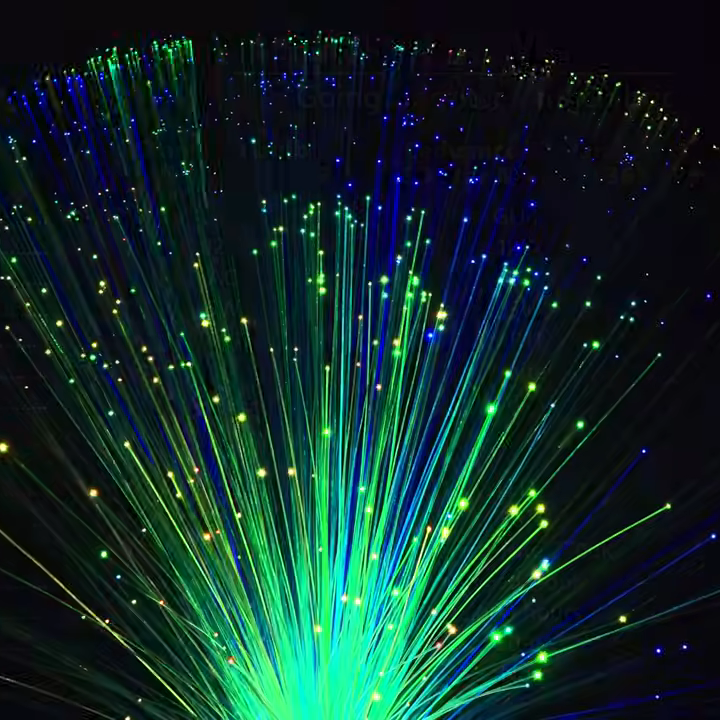
For fans of fiber optic lamps, there's one major drawback: they're often remarkably dim. But that was a problem [Brainiac75] was determined to solve. They set out to hack the technology and deliver terrifying amounts of light while still retaining their quirky charm.
The key issue with older fiber optic lamps is that they use a dim filament lamp or halogen lamp to light them up. These lamps also often feature a spinning color disk, which, although adding a touch of whimsy, has the side effect of absorbing some of the already-limited light output. When it came time for [Brainiac75] to upgrade their own decades-old lamp, they decided to stick within the specs of the original halogen lamp.
The fixture was rated for 12 volts at 5 watts, with a GU4/GZ4 compatible base, and white light was desired so the color wheel could still do its thing. The first step in upgrading the lamp was swapping out the original 5 W halogen for a 2.5 W LED unit. This brought a significant upgrade in brightness, as the LED is roughly equivalent to a 20 W halogen in light output.
But [Brainiac75] didn't stop there. They upgraded to a 4.2 W LED, which further improved the look of the lamp. The result was a dramatic increase in brightness and a much more impressive display. But it still wasn't enough for [Brainiac75]. They wanted something even brighter.
That's when they turned their attention to a modern fiber optic lamp, one that ran off batteries and used a single color-changing LED to illuminate the fibers. This lamp was incredibly cheap, but also incredibly bright. However, it was still not as bright as [Brainiac75] wanted.
The final step in their upgrade was illuminating the plastic fibers with an RGB stage lighting laser rig – namely, the LaserCube Ultra 7.5 W from Wicked Lasers. This thing is a powerhouse, and when cranked up to full brightness, it makes the fiber lamp eye-searingly bright, quite literally.
But here's the thing: even at maximum brightness, it was difficult for [Brainiac75] to film. The light was so intense that it caused problems with their camera settings. So they decided to dial down the laser output and see what happened. And what a difference it made!
With the laser output dialed way down, the lamp looked amazing – rich saturated colors dancing across the fiber bundle as the lasers did their thing. It was truly a sight to behold.
If you've ever wanted to build a fiber lamp that doesn't look like a cheap gimmick, now you know how. And it's not just about adding more light; it's about creating an immersive experience with color and movement.